“Nothing ever happens.”
Or so sayeth the meme. Political life in advanced capitalist societies often feels eternally unchanging. The rich get richer, the rest of us get poorer, political institutions lose legitimacy, ecological crises accelerate, and yet the basic structure of the system appears stubbornly unchanged.
This apparent stubborn stability has encouraged both liberal gradualism and left pessimism: one side assumes reform will accumulate into transformation over time, while the other doubts that meaningful change is possible at all.
The Scientific Bias of Gradualism
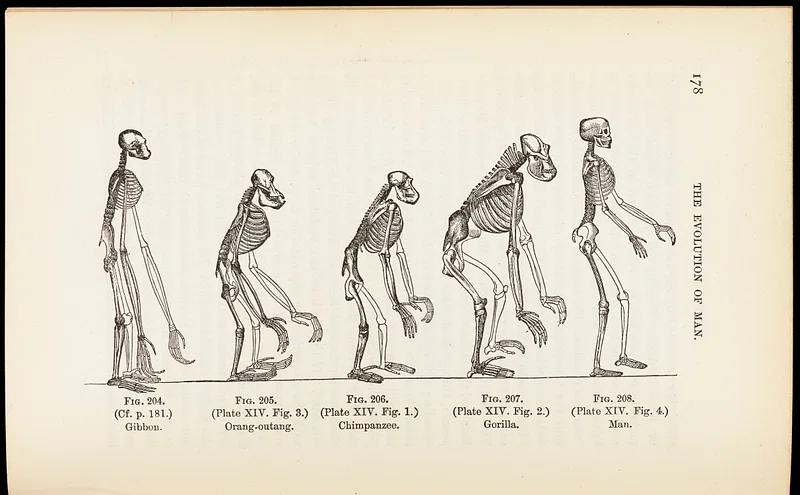
The evolutionary theory of punctuated equilibrium, developed by Stephen Jay Gould (a personal hero) and Niles Eldredge, offers a more realistic framework for understanding political and economic transformation. The theory holds that species tend to experience very long periods of relative stability, interrupted by brief episodes of rapid, sharp change driven by environmental disruption. Evolution, in this account, is not a smooth and continuous process but a stop-start one, characterized by extended stasis punctuated by sudden massive reorganization
Gould was explicit that this insight had implications beyond biology. A self-identified Marxist and historian of science, he argued that gradualism in evolutionary theory reflected cultural and ideological preferences. “The prevalence of gradualism in evolutionary thought reflects a set of cultural preferences about change, not the overwhelming force of data,” he wrote at the time. The assumption that change must be slow, continuous, and incremental mirrored liberal political beliefs that social systems naturally improve through reform, patience, and institutional learning.
Punctuated equilibrium challenged that comfort. Stability, Gould insisted, is not the absence of evolution but one of its central features, and therefore something that must itself be explained.
Seen through this lens, capitalist societies appear less as continuously evolving organisms than as systems optimized for stability and keeping things running more or less as is. Legal frameworks, property relations, labor markets, welfare regimes, and political parties are all structured to reproduce existing arrangements and manage conflict within narrow bounds. Change does occur, but it is typically marginal, technocratic, or distributive, leaving underlying power relations intact. Incremental reform often strengthens the resilience of the system rather than transforming it, postponing crisis while quietly accumulating contradictions.
This helps explain why liberal political economy so often misreads moments of rupture. Financial crises, mass uprisings, sudden realignments, and state transformations appear to come “out of nowhere,” even when their causes have been visible for decades. Trump and the wave of authoritarianism he is riding seems like some strange outlier. The problem is not a lack of warning signs, but an analytic framework that assumes continuity where history repeatedly delivers anything but.
Historical Disruptions
Historical materialism has long recognized this pattern. Marx described capitalism as a system capable of reproducing itself for long periods while generating internal tensions that eventually erupt into crisis. The point was never that collapse was inevitable or that outcomes were predetermined, but that structural contradictions tend to accumulate silently until existing institutions can no longer contain them.
Gould noted this affinity directly, observing that punctuated equilibrium aligned closely with Marxist accounts of long stability punctured by revolutionary transformation. “Punctuated equilibrium has often been called a Marxist theory. That is not accidental,” he wrote in Hen’s Teeth and Horse’s Toes (1983). He argued instead that Marxists had simply taken historical discontinuity seriously long before biologists did.
Twentieth-century political economy offers abundant examples of this dynamic. The New Deal as a state compromise to stave off massive strike waves was not the result of decades of patient reform, but of the Great Depression’s sudden destruction of economic orthodoxies and political constraints. Social democratic like solutions across Europe expanded dramatically after World War II, when total war shattered fiscal taboos and legitimized planning on a scale previously unthinkable. The neoliberal turn of the 1970s was likewise not a slow ideological conversion, but a response to inflation, energy shocks, and profitability crises that destabilized the postwar settlement. In each case, long periods of relative stability ended abruptly, and new regimes emerged in compressed time.
And here again over the last year we see the kinds of black swan weeks that feel like years happen over and over again–with rapid risings and fallings of the US right and left. Zohran’s win in NYC is a thing simply unimaginable a decade ago. The financial crisis of 2008 and the overlapping shocks of the 2020s suggest that we may be living through a prolonged punctuation whose outcome remains unresolved.
Existing institutions have absorbed extraordinary stress without fully transforming, producing a sense of suspended crisis rather than resolution. Punctuations do not guarantee successful adaptation. Some end in authoritarian consolidation, stagnation, or fragmentation rather than renewal.
One risk in applying punctuated equilibrium to politics is fatalism. If systems change only during crises, it can seem as though agency matters little outside moments of rupture. Gould rejected this conclusion. Long periods of stasis are not empty time. They are periods in which ideas are developed, organizations are built, capacities are tested, and alternative institutions are quietly assembled. When rupture comes, the decisive factor is rarely the brilliance of new ideas invented in the moment, but the readiness of forces that already exist.
Implications for a Strategy of the Left
This all has important implications for left strategy. “Stasis is data,” Gould famously wrote in 1977.
It suggests that the central political task during periods of apparent immobility is not to force premature breaks or indulge in fantasies of imminent collapse, but to prepare for moments when the constraints of normal politics weaken. It also cautions against mistaking institutional durability for legitimacy. Systems can endure long after they have lost popular consent, precisely because they are designed to resist change.
Punctuated equilibrium does not offer a blueprint for political action, nor does it even promise a general law of change. But a nondogmatic, non-mechanistic reading of it applied to society is a way of thinking clearly about time, crisis, and transformation. It reminds us that stability is not a natural, eternally constant baseline and that real change often happens faster than those living through stasis are prepared to imagine.
Capitalist societies are not slowly evolving toward justice or collapse. They are systems under pressure, capable of long endurance and sudden failure. The task of politics is not to predict the exact moment when equilibrium breaks, but to decide who is prepared to shape what comes after.