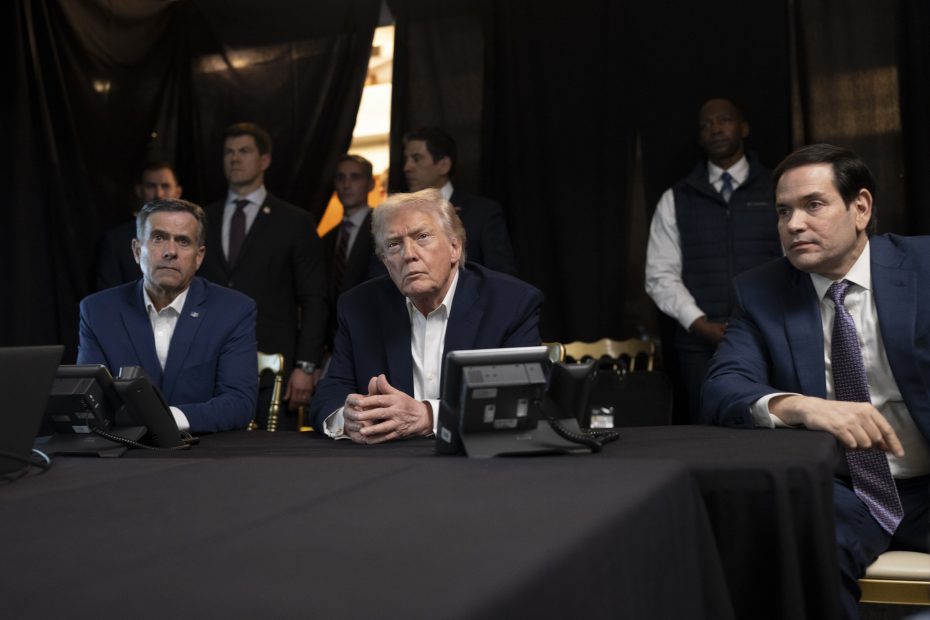
Trump’s attack on Venezuela on January 3rd was an illegal violation of another’s nation’s sovereignty. But why did it happen, and more importantly, what can we in the U.S. do to resist it and other coming imperialist ventures? Power Map’s Daniel Goulden spoke with Gabriel Hetland, an Associate Professor of Africana, Latin American, Caribbean, and Latinx Studies at the University of Albany, to try and get to the bottom of these critical questions.
Daniel Goulden: The first thing I want to ask you about is drug trafficking. The arrest warrant accuses him of running a drug cartel basically, is that at all true?
Gabriel Hetland: It’s such a farce that the Department of Justice actually admitted that this organization that they have been talking about for months, the Cartel de los Soles, doesn’t exist. It is true that there is some drug trafficking in Venezuela and that it has infiltrated the state, but Venezuela is not a producer of drugs on any scale whatsoever. It’s a very minor player in the transit route for cocaine, mostly from Colombia, but most of that goes to Europe and not the U.S.
There’s a lot of illicit activity in Venezuela. There’s illegal gold mining, there’s all sorts of corruption, there’s phony businesses that get money from the state and then don’t actually produce anything. So there’s many forms of illegal and corrupt activity that the state is involved in, and I’m sure Maduro himself and officials were involved in that in various ways, but the idea that he was the head of this drug trafficking cartel is ridiculous.
One account that I think is probably pretty accurate says that the CIA invented Cartel do los Soles in the 1990s, but it wasn’t actually a cartel, and wasn’t actually an organization. Tren de Aragua, which is a gang in Venezuela that does have some reach in the U.S. does exist, but that’s not the cartel that Trump and Rubio have pointed to, and Maduro’s not the head of it either. Whatever criticisms you can have of Maduro, the idea he’s the head of a narco state is ridiculous.
And then just to point out how farcical this whole thing is, in early December, Juan Orlando Hernández, the ex-president of Honduras, who was convicted in the United States and sentenced to 45 years for actual narco trafficking, was pardoned by Trump!
Daniel Goulden: So what are the actual reasons for this kidnapping? Trump himself says it’s for oil, but at the same time, oil companies are not producing as much, and the price of oil is not high enough to justify new investment. It weirdly seems that oil is not the actual reason for this. I’m curious about your take on that.
Gabriel Hetland: I think oil is part of it, but definitely not the whole thing. I would say a major factor is the project to destroy the Latin American left. Another is Marco Rubio’s lifelong obsession with Cuba. Venezuela is a stepping stone to his real goal, which is regime change in Cuba. We can all have our complicated feelings about the government in Cuba, but Marco Rubio shouldn’t have anything to do with it.
Stephen Miller has also been surprisingly heavily involved, and he’s obsessed with fentanyl production in Mexico. He wanted to bomb fentanyl labs in Mexico over the summer, but that got translated into the boat bombings of supposed drug boats in the Caribbean and Eastern Pacific, although no evidence has ever been produced to substantiate any of the claims that the people smuggling them were actually drug dealers.
Then Venezuela fits into the broader anti-immigrant frenzy. War with Venezuela is useful to whip up anti-migrant tendencies, and Venezuelans specifically have been targets of such racist, xenophobic sentiment. There’s also a specific reason that if the U.S. is in a war with Venezuela, they’re hoping that the Supreme Court will say they can deport as many Venezuelans as they want and call them enemy combatants. I’m not sure how this relatively smooth kidnapping of Maduro will affect that because it’s not like the U.S. is in an active war with Venezuela.
I do think oil is part of it. Not the main one, not the only one, but Trump is obsessed with oil. And he’s obsessed with controlling Venezuelan oil. There’s reports that Trump has been talking to oil company executives for months about his plans in Venezuela. He didn’t inform Congress of what he was going to do, but apparently he told oil companies a while ago. He has a ridiculous narrative that Venezuela stole the US’s oil. I think that’s loosely based on the fact that U.S. companies were involved in the development of the Venezuelan oil industry over the course of the 20th century, and then there was a nationalization of oil in Venezuela in 1976, but that was fully compensated in the courts. There was a renationalization under Chavez in 2007, and there are some disputes around that and some oil companies are upset about it, but Trump is just really confused when he talks about all this.
But the idea of resurrecting Venezuela’s oil industry is also a really challenging project. It’s been utterly devastated by U.S. sanctions. Experts who study it have said it’ll take a decade to get back on its feet. This is not something that Trump could actually profit from overnight, it will take quite a long time.
And then the other thing I would say in terms of motivation for what is happening is a will to dominate. The Trump administration, domestically and in foreign affairs, just wants to have the ability to do whatever the hell it wants, anywhere, with no restrictions. You can see this in the rhetoric that Hegseth and others have used, it’s all about whatever the U.S. decides, that’s what’s going to go. It seems like there was a minor motivation for Trump to take out Maduro because he didn’t like the fact that he was dancing in the streets, and Trump felt he was making fun of him and making light of the threats. There’s this machista element. During the press conference Hegseth had an almost psychosexual moment, where he was talking about warriors and how beautiful it was how these men were completing the operation.
Daniel Goulden: What is the connection between America’s chaotic domestic politics and what just happened in Venezuela?
Gabriel Hetland: There’s some obvious ones like the anti-Maduro lobby, and the anti-communist far right in Miami, that Marco Rubio is connected to, and they have exerted significant pressure on Trump over the last year. There was a special envoy, Richard Grinnell, who was going down to Caracas and had a pretty good relationship with Maduro. He was trying to get a deal for Chevron and open up the Venezuelan economy. It seemed like Trump was fairly open to that, but then there were some far right Cuban American Republicans in Florida that just exploded and were really upset about that, and were pushing against a “normalization” of relationships with Venezuela.
It’s hard to disentangle the project of foreign and domestic domination. Trump wants to do whatever he wants with his enemies. I talked about it in a piece I wrote for New Left Review in October as “dominance without hegemony.” We think of Gramsci’s concept of hegemony as political rule that is achieved through a combination of force and consent, but with consent prevailing over force, and popular buy-in to some extent. Trump is not operating in that way a lot of the time. He’s operating in a much more openly coercive, nakedly repressive way, both domestically and abroad. There’s some degree of continuity in that project in the foreign and domestic realms.
The other thing is the Epstein files. The desire to distract from the domestic pressure around the Epstein files has been regularly mentioned. It’s hard to imagine that that hasn’t been something of a factor—the old whip up a foreign war to distract from your problems at home seems to be part of the dynamic going on.
Daniel Goulden: I noticed a lot of people saying that in the lead up to Iraq we at least came up with a narrative that we were giving the Iraqis freedom when we wanted to invade for oil, now we’re not even doing that. But it seems to me that was missing the point because it was still the exact same thing. Oil was the narrative this time, while the actual reasons were not oil, but attempting to solidify an authoritarian hyper-masculine regime, and make Trump look good.
Gabriel Hetland: I think they would have been delighted to have a non-Madurista government in place, but the reason they are in this quasi-alliance, and left in place most of the Maduro government, is because of their interest in stability. They recognize the opposition has no prospects of smoothly transitioning Venezuela or controlling the military. Maria Carina Machado, a far right leader who earlier this year won the Nobel Prize (ridiculously in my opinion), doesn’t have any actual ability to run or control Venezuela. That’s why Trump very explicitly threw her under the bus, saying she doesn’t have the respect to be president. He means within the current regime.
The word democracy didn’t appear once in the press conference on January 3. That’s pretty striking because even though it clearly is not a motivating factor at all for Trump, it has been something Marco Rubio has talked about a fair amount over his career, but I don’t even know if he has used the word democracy at all in recent comments about Venezuela, maybe he was sort of gesturing in that a direction a bit, but the idea that it’s about democracy is absolutely not part of the project whatsoever.
It’s really the project of dominating Latin America, threatening other leftist leaders in Latin America, threatening other countries around the world.
Daniel Goulden: What is next for Venezuela and the Venezuelan people?
Gabriel Hetland: It’s important to start with the fact that Venezuela has been in an incredible crisis since 2016-2017. There are many different factors that are responsible: mismanagement by the Venezuelan government, currency policy, the dependency on oil and the decline in the price of oil around 2014. Then U.S. sanctions were a huge piece. Life has been really hard in Venezuela. Something like seven to eight million Venezuelans left in the last decade. But the situation now could be even worse, and this is what’s terrifying.
The number one biggest threat to the economic well-being of ordinary Venezuelans and political stability is the oil blockade that Trump has declared as of December 16th. He said there’s going to be a complete and total blockade of sanctioned oil tankers. The oil blockade could be devastating because Venezuela gets the vast majority of its income for the state, which then also uses it for importing medicine and food and all sorts of necessary basic goods, by selling oil abroad. Virtually everything in Venezuela comes from the sale of oil. To the extent that the Trump administration has in fact succeeded in blocking the sale of oil and explicitly plans to continue that blockade for the indefinite future, that could be utterly devastating. The well-being of ordinary Venezuelans is profoundly under threat right now.
Everything Trump is talking about doing just adds to that. He’s talking about controlling Venezuela’s oil industry, specifically controlling the profits from it. It’s a little unclear, but it seems there’s going to be some institutionalized relationship there. It’s neocolonial. The U.S. is saying they’re going to force Venezuela to only buy American-made goods based on the sale of Venezuelan oil. It’s incredibly coercive. Rubio has very explicitly said that his plan is to coerce the Venezuelan government into doing whatever the U.S. wants. If you combine that with Trump’s desire to personally control the oil revenue and personally control the oil industry as much as possible, it doesn’t bode well for the Venezuelan people.
It also means that the question of stability is really hard to imagine in that scenario. If Venezuela has even less income than they have now that will be catastrophic for the population, and catastrophic for the stability of Venezuela because there’s actors who benefit from oil money flowing through Venezuela. A lot of that is illicit and corrupt, but it keeps a degree of stability that could be blasted away if that goes by the wayside.
Daniel Goulden: Trump was incredibly hard on Venezuela in his first term. It’s not like this is a new thing, although the tenor is much more extreme. Did the Biden administration reverse any of that or did the Biden administration keep a lot of those sanctions in place, which set the groundwork for Trump to do what he’s doing now?
Gabriel Hetland: The Biden administration did loosen some of the sanctions, but it did not remove them or normalize relationships with Venezuela. There was an ability for Chevron to pretty actively get involved, and that had some effect. Venezuela had a modest, but genuine economic recovery over the last two years after close to a decade of recession and depression. 74% of the economy was destroyed between 2012 and 2020, which people say is the greatest collapse of a non-war time economy in modern history, and the greatest collapse of an economy in Latin American history period. That lasted through 2020. Then in the last couple of years it had started to recover a bit. Life was still really hard for ordinary Venezuelans, it wasn’t great for them, but it was getting a little bit better. That happened under Biden.
Now under Trump with the repressive and coercive situation, I think that could not only be reversed, but made even worse than it was before. We’ll have to see what happens as things are really dynamic and fluid, but there could be some very bad scenarios.
Daniel Goulden: The new president of Venezuela, Delcy Rodríguez, at first it seemed like Trump was pitching that she was going to play ball, but then she had a big press conference and said “Maduro is still our president.” Will the new Venezuelan government go along with these neo-colonial requests from the Trump administration?
Gabriel Hetland: Her initial statement was indeed confrontational, and pro-Moduro. That was hours after he had been kidnapped and was in the process of being flown to New York. But on Sunday, the day after, she did a much more conciliatory post on Instagram, where she explicitly said we want to cooperate with the U.S. Since then she’s been mostly conciliatory with some occasional more nationalist rhetoric. I think you have to appreciate the difficult spot she’s in. Trump said that if she doesn’t do what we want, she will meet a face worse than Maduro’s. I don’t know if he’s saying that they would kill her, but it seemed to be the implication.
There’s a lot of good reporting going back months now suggesting that there had been talks between the U.S. and Venezuela, and the plan was to put Delcy Rodríguez in, and apparently Maduro had signed off on that. It would have allowed him to stay in Venezuela and not even have to go into exile. But it seemed clear that Trump wasn’t willing to not have Maduro as a trophy.
A lot of Venezuela experts are speculating, and I would tend to agree, that it’s hard to believe that Rodríguez and some other high ranking members of the Maduro regime weren’t coordinating to some degree with the U.S. I don’t think this necessarily means they plotted the whole thing or betrayed Maduro, but the operation was relatively peaceful. There are 80 people dead, we don’t want to act like that’s not a lot of people, but it’s still a relatively modest death toll for such a major operation. How smooth it was, suggests that there might have been some degree of coordination, and then certainly she has been pretty cooperative, with the important note of what else could she do? She has a gun to her head. It’s hard to imagine what else she could do in this situation.
She’s also trying to appease the Chavista base by occasionally making more nationalist comments and talking about autonomy. She doesn’t have no room for maneuver. She has what Trump needs right now, which is the ability to control the government. She’s able to hold together the coalition and the military in place, and maintain a degree of unity. That’s pretty important. Trump doesn’t want a chaotic situation. He doesn’t want boots on the ground. He’s said he’s open to it, but it’s clear that’s not their preference. So she has something, but other than that she doesn’t have that much leverage. The Trump administration would say, with some credibility, that if you don’t do what we want, we’ll get rid of you and find someone else in the Maduro regime who will.
Daniel Goulden: Medium to long term, will she be able to hold the coalition together? Will the coalition fall apart? Or will there be a bottom-up uprising against the regime and its complicity with the U.S. government?
Gabriel Hetland: Her ability to hold the coalition together is going to be pretty tricky. For the time being it seems feasible that she might be able to provide some degree of stability. Things seem to be surprisingly calm and stable in Venezuela, more than I would have thought if you had told me on Saturday morning that Maduro had been abducted. There’s reports of pretty significant repression. But I would say the problem, again, goes back to the question of the economy. If the sanctions regime remains in place, the oil blockade in particular, it’s just going to get more and more pressure that’s going to explode in various ways. Then maybe you could see a bottom-up popular uprising, or you might see something with members of the military who are upset.
If the U.S. does push a coercive neo-colonial relationship, it’s possible, I don’t want to say that it could have positive effects in Venezuela, but it could be less devastating than some of the alternatives. If enough of the money from selling oil to the U.S. went back to Venezuela and Delcy Rodríguez was able to utilize it to keep various people in powerful positions, especially in the military, happy and then provide some degree of material comfort to ordinary people, I think she will have a possibility of maintaining a higher degree of stability. Whether or not that will happen is a very open question.
There’s also a bunch of competing factions within the Venezuelan state and within Chavismo. There’s different armed groups, involved in illegal gold mining and other illegal activities. The potential for some sort of armed conflict exists. That could certainly happen in Venezuela. It’s not totally far-fetched. If Delcy Rodríguez was not able to keep various sectors happy and provided for, we could see a very unstable situation.
Daniel Goulden: What do you see as the best avenues for people in the U.S. who are horrified by this to resist and fight back against the Trump administration?
Gabriel Hetland: The classic sort of things like protesting and marching are important. We’ve certainly seen a lot of more mainstream Democrats criticize the attack on a procedural level, critical of the fact that Trump doesn’t have congressional authorization for this. But are we really okay with the abduction of foreign leaders and military coups that are authorized by Congress? That’s a pretty weak way to oppose it. A stronger way is to have a more forceful anti-imperialist project, as we’ve seen with the Palestinian movement. It’s been both stronger than it’s ever been, and also sadly seems to be very ineffectual in terms of changing U.S. policy over Gaza, but there’s still a potential. We have seen a lot of growth in that in the last year or two. That is one thing that needs to continue happening. There has to be people saying over and over again that the U.S. is acting as an empire and it doesn’t have the right to do so. We don’t want to live in an empire, we want the U.S. to be a partner to Latin America and treat other countries with respect, at a minimal level not invading them or violating their national sovereignty.
Another thing I’m thinking about is oil imperialism and decarbonization. That’s a more long-term project, but I do think that matters. The extent to which oil is one of the factors here, it’s not the only one, probably not the most important one even, but one of them, means that decarbonization in the U.S. is crucial, and weakening the power of fossil capital in the U.S. is an important part of that. If oil companies don’t have a market for oil in the U.S. because we’ve transitioned energy systems to renewable energy, then why would Trump invade other countries for oil? That’s not going to happen overnight, but it would eliminate one of the significant factors pushing imperial projects of domination in Latin America and elsewhere.
Really pragmatically right now the focus should be pretty relentlessly opposing what the U.S. is doing. There’s been calls from people on the left to not denounce Nicolás Maduro right now and just focus on U.S. actions, I’m in partial agreement. I think we shouldn’t focus too much in this moment on criticizing Maduro. And in terms of critiquing what the US has done it doesn’t matter if Maduro is legitimate or illegitimate. There are many valid reasons to criticize Maduro, however, and I think we can’t shut our eyes to that either, even if we strategically maintain the focus on the US actions.
I find it a little frustrating that there’s a section of the left that wants to go in the opposite direction and hold Maduro up as a wonderful example of a revolutionary leader. I would say that just as we should be quiet about Maduro, I don’t think we should be talking positively about him either. I’ll say as somebody who has studied Venezuela for two decades, it’s ridiculous to talk about Maduro that way. You lose all credibility. There’s massive frustrations of the people of Venezuela, and we absolutely shouldn’t be celebrating him because if you do, it’s clear very quickly to anyone who knows about Venezuela that either you don’t know what you’re talking about, or you’re ignoring a very different reality from the one you’re trying to spin. Just be quiet when it comes to that question and keep the focus on fighting U.S. imperialism.
We can try to push moderate Democrats into more anti-imperialist stances. I’m not a big fan of Chuck Schumer, and he’s been awful on Venezuela. A month or two ago he refused to explicitly condemn the idea of regime change within Venezuela. But some of his statements in the last few days have been stronger. He’s actually questioning the idea of regime change, and questioning some of the lies that Trump has engaged in. So I think that this is a moment to hold up more anti-imperialist progressives and leftists like Bernie Sanders, Zohran Mamdani and AOC, who have had much better statements. Bernie in particular has been really good this week. He explicitly called this rank imperialism, and said it’s not only unconstitutional, it’s not just a problem that Trump isn’t going to Congress, but Trump doesn’t have the right to go after other countries. We should be supporting that and amplifying it, and trying to push other Democrats, and some Republicans too, to take stances like that.
Most of the Republicans have not been particularly great on the issue of Venezuela, but some like Marjorie Taylor Greene, who I’m not a fan of, has had a pretty strong critique of Trump’s Venezuela policy for quite a while. We need to have our clear left politics, and our clear anti-imperialist stance, but we have to be strategic. We’ll have to work with liberals, and might even have to work with some moderate Republicans to push back on Trump’s authoritarian project.
This is a moment that is going to expose the limits of U.S. power within Latin America. Trump wants to push everybody out. He’s threatening Gustavo Petro in Colombia, he’s threatening Claudia Sheinbaum in Mexico, he’s threatening Lula in Brazil. But when he’s done so over the past year on various issues, it’s blown back in his face at times. Trump tried to slap 50% tariffs on Brazil because he was upset about how Brazil was correctly prosecuting Jair Bolsonaro for his attempted coup. Trump got mad about that and went after Lula, but it helped him. Lula was floundering in the polls before, but he was boosted by it. So it’s possible that there will be an anti-imperialist backlash that will help some leftist, nationalist and anti-imperialist candidates in Latin America.
I would end with that to stop Trumpism, we need to have a credible appealing alternative and that’s where the project of democratic socialism represented by the DSA in New York City comes in. Zohran Mamdani and his amazing victory is so necessary. You can’t fight Trump by saying “we don’t want this,” you have to show people that you can deliver something different and something better. I think we’ll be able to change the political dynamics in this country and hopefully in the world, by building a better, different political project.
Daniel Goulden: What is the outlook here for other Latin American leftists, both in terms of the threat from Trumpism? I know that there had been talks of the pink tide receding? Is this maybe a chance for the pink tide to come back? Are these governments in danger of U.S. intervention?
Gabriel Hetland: There’s contradictory dynamics. It’s really frightening that Trump is going to feel emboldened by his success in Venezuela. He’s also had some success in Argentina, where they pumped $40 billion in its flailing economy because the far-right libertarian president Javier Milei was destroying Argentina’s economy and the U.S. rescued it, allowing Milei to win an important national election. His party did surprisingly well when they should have failed. There was also a far right leader just elected in Chile. So Trump’s project of remaking Latin America on far right terrain is going to continue, and he will have some ability to succeed in that. He’s going to threaten other leaders and may engage in that just as he did with Maduro. He’s been talking about doing so with Gustavo Petro. Apparently he and Petro are going to meet in the White House, so we don’t exactly know what’s going on, but that’s a good sign that Trump’s not immediately talking about invading Colombia.
Trump has said to Petro “watch your ass,” that’s a direct quote, and he’s said similar things over and over again. You can imagine that with Colombia’s presidential election in May, Iván Cepeda, the presidential candidate for the left, saying to right wing opponents “do you think the president of Colombia should have to watch his ass the way that Trump told him to?” They’ll be in an awkward spot and either say yes, and show they’re supplicants to U.S. empire, or they’ll have to defend a leftist president who they don’t like. The dynamic will play out in interesting and not entirely predictable ways across Latin America, and in ways that will sometimes benefit the left.
Cuba is going to be devastated. The U.S. is demanding that Venezuela sever its economic relationship with Cuba, which has been fundamentally important for the Cuban state for a number of years. Venezuela sends heavily discounted oil to Cuba. They don’t use most of it, but sell it back on the international market at market rates and use the money for hard currency that Cuba then uses for all sorts of purposes. So Cuba is going to quickly be in a tight spot economically because of what’s happening in Venezuela. They’re the object of direct military threats right now. It’s not clear when exactly that would happen or if it will happen, but it’s a frightening and real possibility at the moment.
It’s a really dangerous time, but I don’t think it’s an entirely hopeless time. We’re in for a wild ride, but it’s not going to be exactly what anyone might predict.
Daniel Goulden: Socialism has always been about internationalism, but in the past we simply didn’t have that many national level figures. It’s hard to engage in internationalism with just your state representatives. But now we have the mayor of the largest city in America who’s a democratic socialist and shares politics with Sheinbaum, Lula and Petro. Given that the way Trump’s aggression in Venezuela is so linked with his domestic aggression, is there potential for international solidarity and international organizing among the broad democratic socialist left?
Gabriel Hetland: There’s definitely potential for that to happen. You’re absolutely right that the left needs to be genuinely internationalist. We don’t want oil imperialism, but we also don’t want, from an eco-socialist point of view, Trump to invade Greenland and then have access to critical minerals that we need for renewable energy, for instance. We don’t want green imperialism either. Having internationalism be a major focus of the left is essential.
The extent to which the left can not engage in what are in my mind relatively unnecessary and self-defeating foolish sectarian battles is important. Don’t get into internal fights about the character of other governments when you don’t have to. Be strategic and disciplined, and just keep your eyes on the prize of opposing U.S. imperialism. It’s not only okay, but necessary to criticize leftist governments in other countries if you study them and actually understand them, but strategically, the priority should be, especially in a moment like this, fighting U.S. imperialism.
If the left in the U.S. is shown to be standing in solidarity with popular movements and ordinary people in Latin America, that could mean something for them. With Palestine, leftists are standing in solidarity with them, even if they’re not effectively stopping the genocide, but it means something. It keeps a political connection and a human connection. I think there’s some value in it. The left should use this moment to become more internationalist and try to build a movement that can stop Trumpism for the long term and let Latin America breathe a little easier.